


Page 3 - Open Access - Oct 2019
P. 3
point of view
4. Methods oF AnAlysIs effects are not explicitly considered in the recommended
models .
[4]
Sectional analysis is a common approach to compute the
fire resistance of a concrete structure. Some of the methods
adopted in the sectional analysis are discussed in the following 4.1.1 Concrete
sections:
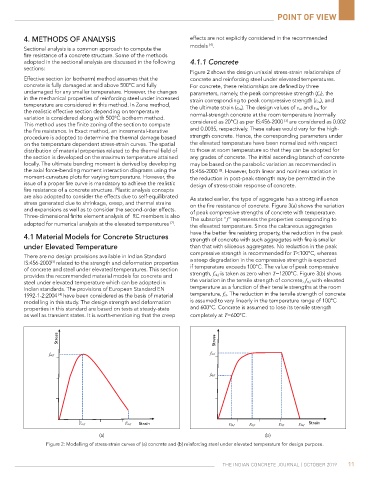
Figure 2 shows the design uniaxial stress-strain relationships of
Effective section (or Isotherm) method assumes that the concrete and reinforcing steel under elevated temperatures.
concrete is fully damaged at and above 500°C and fully For concrete, these relationships are defined by three
undamaged for any smaller temperature. However, the changes parameters, namely, the peak compressive strength (f ck), the
in the mechanical properties of reinforcing steel under increased strain corresponding to peak compressive strength (ɛ co), and
temperature are considered in this method. In Zone method, the ultimate strain (ɛ cu). The design values of ɛ co and ɛ cu for
the realistic effective section depending on temperature
variation is considered along with 500°C isotherm method. normal-strength concrete at the room temperature (normally
[3]
This method uses the finite zoning of the section to compute considered as 20°C) as per IS:456-2000 are considered as 0.002
the fire resistance. In Exact method, an incremental-iterative and 0.0035, respectively. These values would vary for the high-
procedure is adopted to determine the thermal damage based strength concrete. Hence, the corresponding parameters under
on the temperature dependent stress-strain curves. The spatial the elevated temperature have been normalized with respect
distribution of material properties related to the thermal field of to those at room temperature so that they can be adopted for
the section is developed on the maximum temperature attained any grades of concrete. The initial ascending branch of concrete
locally. The ultimate bending moment is derived by developing may be based on the parabolic variation as recommended in
the axial force-bending moment interaction diagrams using the IS:456-2000 . However, both linear and nonlinear variation in
[3]
moment-curvature plots for varying temperature. However, the the reduction in post-peak strength may be permitted in the
issue of a proper fire curve is mandatory to achieve the realistic design of stress-strain response of concrete.
fire resistance of a concrete structure. Plastic analysis concepts
are also adopted to consider the effects due to self-equilibrated As stated earlier, the type of aggregate has a strong influence
stress generated due to shrinkage, creep, and thermal strains on the fire resistance of concrete. Figure 3(a) shows the variation
and expansions as well as to consider the second-order effects. of peak compressive strengths of concrete with temperature.
Three-dimensional finite element analysis of RC members is also The subscript “f” represents the properties corresponding to
[2]
adopted for numerical analysis at the elevated temperatures . the elevated temperature. Since the calcareous aggregates
have the better fire resisting property, the reduction in the peak
4.1 Material Models for concrete structures strength of concrete with such aggregates with fire is smaller
under elevated temperature than that with siliceous aggregates. No reduction in the peak
compressive strength is recommended for T<100°C, whereas
There are no design provisions available in Indian Standard
IS:456-2000 related to the strength and deformation properties a steep degradation in the compressive strength is expected
[3]
of concrete and steel under elevated temperatures. This section if temperature exceeds 100°C. The value of peak compressive
provides the recommended material models for concrete and strength, f ck,f is taken as zero when T=1200°C. Figure 3(b) shows
steel under elevated temperature which can be adopted in the variation in the tensile strength of concrete, f ct,f with elevated
Indian standards. The provisions of European Standard EN temperature as a function of their tensile strengths at the room
1992-1-2:2004 have been considered as the basis of material temperature, f ct. The reduction in the tensile strength of concrete
[4]
modelling in this study. The design strength and deformation is assumed to vary linearly in the temperature range of 100°C
properties in this standard are based on tests at steady-state and 600°C. Concrete is assumed to lose its tensile strength
as well as transient states. It is worth-mentioning that the creep completely at T=600°C.
1200 1200 Hydrocarbon fire 1.2 1.2 1.2 1.2
Hydrocarbon fire
Stress Stress
ISO 834 fire Stress Stress
ISO 834 fire
1000 1000 1.0 1.0 Calcareous 1.0 1.0
Calcareous
ASTM E119 fire fck,f fck,f fsy,f fsy,f 0.8 0.8 aggergate 0.8 0.8
ASTM E119 fire
aggergatess
Temperature (ºC)
Temperature (ºC) 600 600 External fire fsp,f fsp,f fck,f / fck 0.6 fck,f / fck 0.6 aggergate fct,f / fct 0.6 fct,f / fct 0.6
800
800
External fire
Siliceous
Siliceous
aggergatess
0.4
0.4
0.4
0.4
400
400
0.2 0.2 0.2 0.2
200 200
0.0 0.0 0.0 0.0
0 0 30 30 60 60 90 90120 120 150 150180 180 0 0 400 400 800 800 1200 1200 0 0 200 200 400 400 600 600
Strain
Time (Minutes)
Time (Minutes) co,f co,f cu,f cu,fStrain Strain sp,f sp,f sy,f sy,f st,f st,f su,f su,f Strain T (°C) T (°C) T (°C) T (°C)
(a) (b)
Figure 2: Modelling of stress-strain curves of (a) concrete and (b) reinforcing steel under elevated temperature for design purpose.
12 12 2.5 2.5 1.2 1.2 1.2 1.2 1.2 1.2
1.0
1.0
10 10 2.0 2.0 The IndIan ConCreTe Journal | oCToBer 2019 11 1.0 1.0 Hot-rolled 1.0 1.0
Hot-rolled
Hot-rolled
8 8 0.8 0.8 Hot-rolled 0.8 0.8 0.8 0.8
Cold-worked
1.5 1.5 Cold-worked
fsp,f / fsp
co,f / co 6 co,f / co 6 cu,f / cu cu,f / cu fsp,f / fsp 0.6 0.6 fsy,f / fsy 0.6 fsy,f / fsy 0.6 Cold-worked Es,f / Es 0.6 Es,f / Es 0.6
Cold-worked
4 4 1.0 1.0 0.4 0.4 0.4 0.4 0.4 0.4
Cold-worked
Cold-worked
Hot-rolled
0.5 0.5 Hot-rolled
2 2 0.2 0.2 0.2 0.2 0.2 0.2
0 0 0.0 0.0 0.0 0.0 0.0 0.0 0.0 0.0
0 0 400 400 800 800 1200 1200 0 0 400 400 800 800 1200 1200 0 0 400 400 800 800 1200 1200 0 0 400 400 800 800 1200 1200 0 0 400 400 800 800 1200 1200
T (°C T (°C)) T (°C) T (°C) T (°C) T (°C) T (°C) T (°C)
T (°C)
T (°C)

