


Page 7 - ICJ Jan 2026
P. 7
TECHNICAL PAPER


                                                                  systems, its performance depends on optimizing particle
                                                                  stabilization, dissolution kinetics, and interaction with evolving
                                                                  hydration chemistry [19, 31, 34] .

                                                                  4.  CONCLUSIONS
                                                                  Future direction lies in combining SCMs with nano-silica
                                                                  to produce high-performance concretes that are not only
                                                                  mechanically efficient but also environmentally sustainable.
                                                                  Such blended systems maximize clinker reduction, enhance
                                                                  pozzolanic utilization of industrial by-products, and leverage
                                                                  nano-scale modification to achieve superior durability without
                                                                  compromising dimensional stability. By integrating advanced
                                                                  cement chemistry with resource-efficient material design, nano-
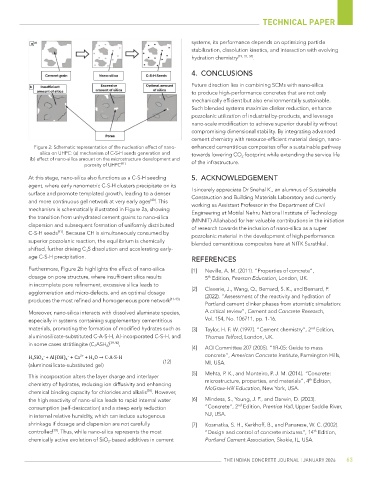
            Figure 2: Schematic representation of the nucleation effect of nano-   enhanced cementitious composites offer a sustainable pathway
               silica on UHPC: (a) mechanism of C-S-H seeds generation and    towards lowering CO 2  footprint while extending the service life
           (b) effect of nano-silica amount on the microstructure development and   of the infrastructure.
                              porosity of UHPC [41]

           At this stage, nano-silica also functions as a C-S-H seeding   5.  ACKNOWLEDGEMENT
           agent, where early nanometric C-S-H clusters precipitate on its   I sincerely appreciate Dr Snehal K., an alumnus of Sustainable
           surface and promote templated growth, leading to a denser   Construction and Building Materials Laboratory and currently
           and more continuous gel network at very early ages . This   working as Assistant Professor in the Department of Civil
                                                    [40]
           mechanism is schematically illustrated in Figure 2a, showing   Engineering at Motilal Nehru National Institute of Technology
           the transition from unhydrated cement grains to nano-silica   (MNNIT) Allahabad for her valuable contributions in the initiation
           dispersion and subsequent formation of uniformly distributed   of research towards the inclusion of nano-silica as a super
           C-S-H seeds . Because CH is simultaneously consumed by   pozzolanic material in the development of high performance
                     [41]
           superior pozzolanic reaction, the equilibrium is chemically   blended cementitious composites here at NITK Surathkal.
           shifted, further driving C 3 S dissolution and accelerating early-
           age C-S-H precipitation.
                                                                  REFERENCES
           Furthermore, Figure 2b highlights the effect of nano-silica   [1]   Neville, A. M. (2011). “Properties of concrete“,
           dosage on pore structure, where insufficient silica results   5  Edition, Pearson Education, London, UK.
                                                                       th
           in incomplete pore refinement, excessive silica leads to   [2]   Claverie, J., Wang, Q., Bernard, S. K., and Bernard, F.
           agglomeration and micro-defects, and an optimal dosage     (2022). “Assessment of the reactivity and hydration of
           produces the most refined and homogeneous pore network [41-43].
                                                                      Portland cement clinker phases from atomistic simulation:
           Moreover, nano-silica interacts with dissolved aluminate species,   A critical review”, Cement and Concrete Research,
           especially in systems containing supplementary cementitious   Vol. 154, No. 106711, pp. 1-16.
           materials, promoting the formation of modified hydrates such as   [3]   Taylor, H. F. W. (1997). “Cement chemistry”, 2  Edition,
                                                                                                          nd
           aluminosilicate-substituted C-A-S-H, Al-incorporated C-S-H, and   Thomas Telford, London, UK.
           in some cases strätlingite (C 2 ASH 8 ) [39-40] ,
                                                                  [4]   ACI Committee 207 (2005). “1R-05: Guide to mass
                                                                      concrete”, American Concrete Institute, Farmington Hills,
                –       –   2+
           H 3 SiO 4 + Al(OH) 4  + Ca  + H 2 O → C-A-S-H    (12)
           (aluminosilicate-substituted gel)                          MI, USA.
                                                                  [5]   Mehta, P. K., and Monteiro, P. J. M. (2014). “Concrete:
           This incorporation alters the layer charge and interlayer                                     th
           chemistry of hydrates, reducing ion diffusivity and enhancing   microstructure, properties, and materials”, 4  Edition,
                                                   [39]
           chemical binding capacity for chlorides and alkalis . However,   McGraw-Hill Education, New York, USA.
           the high reactivity of nano-silica leads to rapid internal water   [6]   Mindess, S., Young, J. F., and Darwin, D. (2003).
                                                                                 nd
           consumption (self-desiccation) and a steep early reduction   “Concrete”, 2  Edition, Prentice Hall, Upper Saddle River,
           in internal relative humidity, which can induce autogenous   NJ, USA.
           shrinkage if dosage and dispersion are not carefully   [7]   Kosmatka, S. H., Kerkhoff, B., and Panarese, W. C. (2002).
           controlled . Thus, while nano-silica represents the most   “Design and control of concrete mixtures”, 14  Edition,
                   [19]
                                                                                                           th
           chemically active evolution of SiO 2 -based additives in cement   Portland Cement Association, Skokie, IL, USA.

                                                                            THE INDIAN CONCRETE JOURNAL | JANUARY 2026  63

