


Page 6 - Open-Access-Jan-2020
P. 6
point of view


         Moreover, construction value chains generate the first stream   a lot of inconsistencies and inaccuracies between data about
         of waste CDW representing 36% of all waste  and being widely   quantities, natures and destinations of CDW generated and
                                            9
         disseminated as many as there are construction or demolition   treated. EUROSTAT collects every two years data on mineral
                                                                                                12
         yards. Too often, CDW have been discarded illegally in natural   waste from construction and demolition . The most recent data
         or urban areas at huge environmental and financial costs for   give figures where mining and quarrying waste and CDW are
         local communities. In 2016, the 28 EU countries generated   counted together as major mineral wastes with regard to their
         around 905 million tonnes of CDW, including 584 million tonnes   treatment. It is still not possible to track down which and how
         of soil and dredging spoil. Inert waste represents 90% of total   much waste generated by construction and demolition have
                      10
         generated CDW . This is this important fraction, which has   been respectively re-used, recycled, recovered in backfilling or
         the biggest potential for recycling into valuable secondary   landfilled .
                                                                       13
         construction aggregates .
                            11
                                                                On the other hand, EUROSTAT gives recovery rates of CDW
                                                                for all EU countries, which show a global recovery rate for
                                                                all EU 28 countries of 89% in 2016. This indicator is the ratio
                                                                of CDW, which is prepared for re-use, recycled or subject to
                                                                material recovery, including through backfilling operations .
                                                                                                              14
                                                                Therefore, this rate does not give any information on what is the
                                                                actual recycling rate of CDW and it ignores the best practices
                                                                implemented to regenerate valuable secondary construction
                                                                aggregates from CDW.

                                                                3. how Does the eURoPeAN PoLICy
                                                                ADDRess the CDw IssUes?

                                                                Since the ‘90s, the European Union (EU) has identified CDW
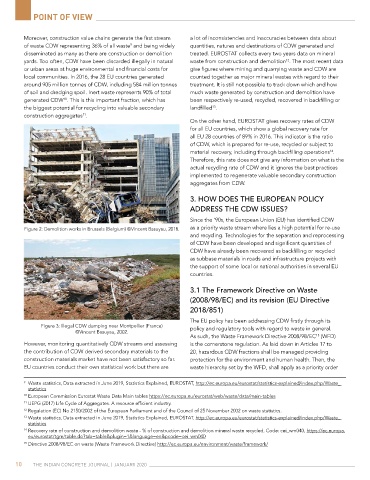
         Figure 2: Demolition works in Brussels (Belgium) ©Vincent Basuyau, 2018.  as a priority waste stream where lies a high potential for re-use
                                                                and recycling. Technologies for the separation and reprocessing
                                                                of CDW have been developed and significant quantities of
                                                                CDW have already been recovered as backfilling or recycled
                                                                as subbase materials in roads and infrastructure projects with
                                                                the support of some local or national authorities in several EU
                                                                countries.

                                                                3.1 the Framework Directive on waste
                                                                (2008/98/eC) and its revision (eU Directive
                                                                2018/851)

                                                                The EU policy has been addressing CDW firstly through its
               Figure 3: Illegal CDW dumping near Montpellier (France)    policy and regulatory tools with regard to waste in general.
                          ©Vincent Basuyau, 2002.
                                                                As such, the Waste Framework Directive 2008/98/EC  (WFD)
                                                                                                          15
         However, monitoring quantitatively CDW streams and assessing   is the cornerstone regulation. As laid down in Articles 17 to
         the contribution of CDW derived secondary materials to the   20, hazardous CDW fractions shall be managed providing
         construction materials market have not been satisfactory so far.   protection for the environment and human health. Then, the
         EU countries conduct their own statistical work but there are   waste hierarchy set by the WFD, shall apply as a priority order

         9   Waste statistics, Data extracted in June 2019, Statistics Explained, EUROSTAT, http://ec.europa.eu/eurostat/statistics-explained/index.php/Waste_
          statistics
         10  European Commission Eurostat Waste Data Main tables https://ec.europa.eu/eurostat/web/waste/data/main-tables
         11  UEPG (2017) Life Cycle of Aggregates. A resource efficient industry.
         12  Regulation (EC) No 2150/2002 of the European Parliament and of the Council of 25 November 2002 on waste statistics.
         13  Waste statistics, Data extracted in June 2019, Statistics Explained, EUROSTAT, http://ec.europa.eu/eurostat/statistics-explained/index.php/Waste_
          statistics
         14  Recovery rate of construction and demolition waste - % of construction and demolition mineral waste recycled, Code: cei_wm040, https://ec.europa.
          eu/eurostat/tgm/table.do?tab=table&plugin=1&language=en&pcode=cei_wm040
         15  Directive 2008/98/EC on waste (Waste Framework Directive) http://ec.europa.eu/environment/waste/framework/


      10    The IndIan ConCreTe Journal | JanuarY 2020

