


Page 5 - Open access sep 2020
P. 5
TECHNICAL PAPER


                                                                  1.1  Extrusion-based printing

                                                                  Extrusion-based printing is done by a layer-wise deposition of
                                                                  fresh concrete. It depends on the properties of concrete such
                                                                  as pumpability, extrudability, buildability, and open time (Le
                                                                  et al., 2012a). Pumpability is the ease of transport of materials
                                                                  through the system, i.e. from the mixer to nozzle. Extrudability
                                                                  is the ease of extruding concrete through the nozzle at a given
                                                                  rate. Buildability is the ability of the printed concrete to retain
                                                                  the imposed loads of subsequent layers without deformation
                                                                  (Labonnote et al., 2016). The open time provides us with
                                                                  information about the change of workability over time: it refers
                                                                  to the time during which concrete retains its necessary fresh
                                                                  properties (Le et al., 2012a).
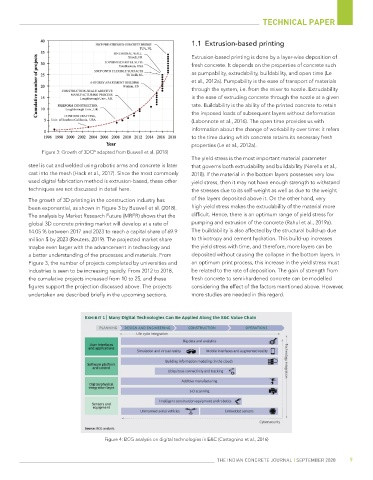
               Figure 3: Growth of 3DCP adapted from Buswell et al. (2018)
                                                                  The yield stress is the most important material parameter
           steel is cut and welded using robotic arms and concrete is later   that governs both extrudability and buildability (Nerella et al.,
           cast into the mesh (Hack et al., 2017). Since the most commonly   2018). If the material in the bottom layers possesses very low
           used digital fabrication method is extrusion-based, these other   yield stress, then it may not have enough strength to withstand
           techniques are not discussed in detail here.           the stresses due to its self-weight as well as due to the weight

           The growth of 3D printing in the construction industry has   of the layers deposited above it. On the other hand, very
           been exponential, as shown in Figure 3 by Buswell et al. (2018).   high yield stress makes the extrudability of the material more
           The analysis by Market Research Future (MRFR) shows that the   difficult. Hence, there is an optimum range of yield stress for
           global 3D concrete printing market will develop at a rate of   pumping and extrusion of the concrete (Rahul et al., 2019a).
           14.05 % between 2017 and 2023 to reach a capital share of 69.9   The buildability is also affected by the structural build-up due
           million $ by 2023 (Reuters, 2019). The projected market share   to thixotropy and cement hydration. This build-up increases
           maybe even larger with the advancement in technology and   the yield stress with time, and therefore, more layers can be
           a better understanding of the processes and materials. From   deposited without causing the collapse in the bottom layers. In
           Figure 3, the number of projects completed by universities and   an optimum print process, this increase in the yield stress must
           industries is seen to be increasing rapidly. From 2012 to 2018,   be related to the rate of deposition. The gain of strength from
           the cumulative projects increased from 10 to 25, and these   fresh concrete to semi-hardened concrete can be modelled
           figures support the projection discussed above. The projects   considering the effect of the factors mentioned above. However,
           undertaken are described briefly in the upcoming sections.  more studies are needed in this regard.


                                    Figure 4: BCG analysis on digital technologies in E&C (Castagnino et al., 2016)


                                                                          THE INDIAN CONCRETE JOURNAL | SEPTEMBER 2020  9

