


Page 15 - openaccess
P. 15
TECHNICAL PAPER


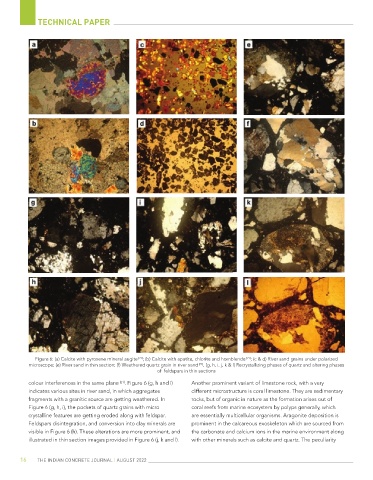
             Figure 6: (a) Calcite with pyroxene mineral augite  [21] ; (b) Calcite with apatite, chlorite and hornblende  [21] ; (c & d) River sand grains under polarized
           microscope; (e) River sand in thin section; (f) Weathered quartz grain in river sand  [21] , (g, h, i, j, k & l) Recrystallizing phases of quartz and altering phases
                                                      of  feldspars in thin sections
           colour interferences in the same plane  [21] . Figure 6 (g, h and i)   Another prominent variant of limestone rock, with a very
           indicates various sites in river sand, in which aggregates   different microstructure is coral limestone. They are sedimentary
           fragments with a granitic source are getting weathered. In   rocks, but of organic in nature as the formation arises out of
           Figure 6 (g, h, i), the pockets of quartz grains with micro   coral reefs from marine ecosystem by polyps generally, which
           crystalline features are getting eroded along with feldspar.   are essentially multicellular organisms. Aragonite deposition is
           Feldspars disintegration, and conversion into clay minerals are   prominent in the calcareous exoskeleton which are sourced from
           visible in Figure 6 (h). These alterations are more prominent, and   the carbonate and calcium ions in the marine environment along
           illustrated in thin section images provided in Figure 6 (j, k and l).   with other minerals such as calcite and quartz. The peculiarity


        16    THE INDIAN CONCRETE JOURNAL | AUGUST 2022

