


Page 7 - ICJ Jan 2026
P. 7
TECHNICAL PAPER


                                                                  carbonation resistance, and corrosion performance . For PLC,
                                                                                                          [14]
                                                                  assessment of eight concrete mixes showed that limestone
                                                                  fineness ≥ 600 m²/kg and overall cement fineness ≥ 425 m²/
                                                                  kg ensure performance parity with OPC at limestone contents
                                                                  up to 15 % [26,27] . Investigations on HVFAC demonstrated that
                                                                  blends incorporating 40 % fly ash with a Blaine fineness of
                                                                  400-410 m²/kg achieve carbonation and corrosion performance
                                                                  comparable to PPC containing 35 % fly ash at 300 m²/kg
                                                                        [16]
                                                                  fineness . In fly ash‑limestone composite cements (24 mixes),
                                                                  optimal performance was achieved with minimum OPC content
                                                                  of 65 % (clinker ≥ 60 %), fly ash 15‑30 %, and limestone 5‑10 %
                                                                  for achieving durability and mechanical properties equivalent or
                                                                  superior to PPC [23-27] . Based upon the mechanical and durability
                                                                  study carried out on concrete designed at various combinations,
                                                                  following proportions were suggested and drafts were prepared
                                                                  that are submitted to Bureau of Indian standards for discussion
                                                                  as well as deliberations.

                                                                  The findings of the study will support the development of new
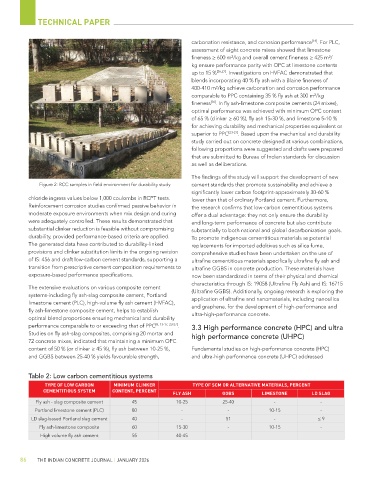
              Figure 2: RCC samples in field environment for durability study  cement standards that promote sustainability and achieve a
                                                                  significantly lower carbon footprint‑approximately 30‑60 %
           chloride ingress values below 1,000 coulombs in RCPT tests.   lower than that of ordinary Portland cement. Furthermore,
           Reinforcement corrosion studies confirmed passive behavior in   the research confirms that low‑carbon cementitious systems
           moderate exposure environments when mix design and curing   offer a dual advantage: they not only ensure the durability
           were adequately controlled. These results demonstrated that   and long-term performance of concrete but also contribute
           substantial clinker reduction is feasible without compromising   substantially to both national and global decarbonization goals.
           durability, provided performance-based criteria are applied.   To promote indigenous cementitious materials as potential
           The generated data have contributed to durability-linked   replacements for imported additives such as silica fume,
           provisions and clinker substitution limits in the ongoing revision   comprehensive studies have been undertaken on the use of
           of IS: 456 and draft low-carbon cement standards, supporting a   ultrafine cementitious materials specifically ultrafine fly ash and
           transition from prescriptive cement composition requirements to   ultrafine GGBS in concrete production. These materials have
           exposure‑based performance specifications.             now been standardized in terms of their physical and chemical
                                                                  characteristics through IS: 19058 (Ultrafine Fly Ash) and IS: 16715
           The extensive evaluations on various composite cement
           systems‑including fly ash‑slag composite cement, Portland   (Ultrafine GGBS). Additionally, ongoing research is exploring the
                                                                  application of ultrafine and nanomaterials, including nanosilica
           limestone cement (PLC), high‑volume fly ash cement (HVFAC),   and graphene, for the development of high-performance and
           fly ash‑limestone composite cement, helps to establish
                                                                  ultra-high-performance concrete.
           optimal blend proportions ensuring mechanical and durability
           performance comparable to or exceeding that of PPC [8, 13-17, 23-27] .   3.3 High performance concrete (HPC) and ultra
           Studies on fly ash‑slag composites, comprising 20 mortar and   high performance concrete (UHPC)
           72 concrete mixes, indicated that maintaining a minimum OPC
           content of 50 % (or clinker ≥ 45 %), fly ash between 10‑25 %,   Fundamental studies on high-performance concrete (HPC)
           and GGBS between 25-40 % yields favourable strength,   and ultra-high performance concrete (UHPC) addressed


           Table 2: Low carbon cementitious systems
                TYPE OF LOW CARBON     MINIMUM CLINKER            TYPE OF SCM OR ALTERNATIVE MATERIALS, PERCENT
                CEMENTITIOUS SYSTEM    CONTENT, PERCENT
                                                           FLY ASH          GGBS         LIMESTONE        LD SLAG
             Fly ash - slag composite cement  45            10-25           25-40            -               -
             Portland limestone cement (PLC)  80              -               -             10-15            -
            LD slag-based Portland slag cement  40            -              51              -              ≤ 9
              Fly ash-limestone composite     60            15-30             -             10-15            -
               High volume fly ash cement     55            40-45


        86    THE INDIAN CONCRETE JOURNAL | JANUARY 2026

