


Page 121 - ICJ Jan 2023
P. 121
TECHNICAL PAPER                                            COLLECTOR’S EDITION


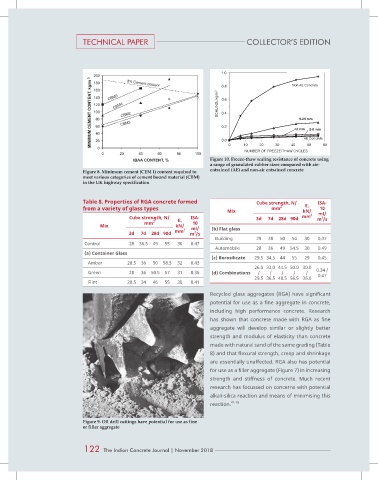
                              Table 8. Properties of RGA concrete formed                    Cube strength, N/     ISA-
                                                                                                             E,
                              from a variety of glass types                       Mix            mm 2       kN/   10
                                                                                                                  ml/
                                               Cube strength, N/  E,    ISA-                3d  7d  28d 90d  mm 2  m /s
                                                                                                                   2
                                                                     10
                                     Mix            mm 2       kN/ 2  ml/   (b) Flat glass
                                                                      2
                                               3d  7d  28d 90d  mm  m /s
                                                                               Building     29  38  50   54  30   0.37
                               Control         28  36.5  49  55  30  0.47
                                                                               Automobile   28  36  49  54.5  30  0.49
                               (a) Container Glass
                                                                            (c) Borosilicate  29.5 34.5  44  55  29  0.45
                                  Amber       28.5  36  50  58.5  32  0.43
                                                                                           26.0  33.0  44.5  50.0  30.0
                                  Green        28  36  50.5  57  31  0.36   (d) Combinations  /   /   /   /   /   0.34 /
                                                                                           29.5 36.5 48.5 56.5 36.0  0.47
                                  Flint       28.5  34  46  55  30   0.41
                                                                            Recycled  glass  aggregates  (RGA)  have  significant
                                                                            potential for use as a fine aggregate in concrete,
                                                                            including  high  performance  concrete.  Research
                                                                            has  shown  that  concrete  made  with  RGA  as  fine
                                                                            aggregate  will  develop  similar  or  slightly  better
                                                                            strength and modulus of elasticity  than concrete
                                                                            made with natural sand of the same grading (Table
                                                                            8) and that flexural strength, creep and shrinkage
                                                                            are essentially unaffected. RGA also has potential
                                                                            for use as a filler aggregate (Figure 7) in increasing
                                                                            strength and stiffness of concrete.  Much recent
                                                                            research has focussed on concerns with potential
                                                                            alkali-silica reaction and means of minimising this
                                                                            reaction. 42, 43


                               122 The Indian Concrete Journal | November 2018

