


Page 4 - Open-Access-Oct-2020
P. 4
TECHNICAL PAPER


                            Anchor Configuration 2                     Horizontal Strip
             CFRP Anchor


                             (i)                                                                    (ii)
                                                (iii)                                                          (iii)
                                       (ii)               (iv)                             (i)
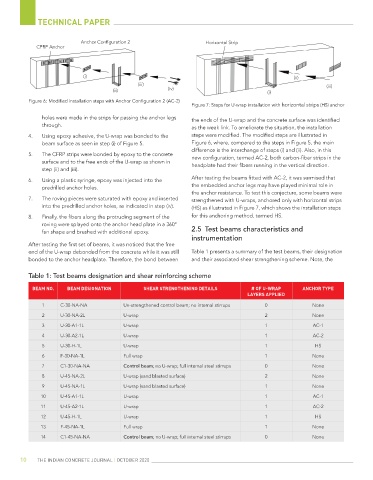
           Figure 6: Modified installation steps with Anchor Configuration 2 (AC-2)
                                                                  Figure 7: Steps for U-wrap installation with horizontal strips (HS) anchor
               holes were made in the strips for passing the anchor legs   the ends of the U-wrap and the concrete surface was identified
               through.                                           as the weak link. To ameliorate the situation, the installation
           4.   Using epoxy adhesive, the U-wrap was bonded to the   steps were modified. The modified steps are illustrated in
               beam surface as seen in step (i) of Figure 5.      Figure 6, where, compared to the steps in Figure 5, the main
                                                                  difference is the interchange of steps (i) and (ii). Also, in this
           5.   The CFRP strips were bonded by epoxy to the concrete   new configuration, termed AC-2, both carbon-fiber strips in the
               surface and to the free ends of the U-wrap as shown in   headplate had their fibers running in the vertical direction.
               step (ii) and (iii).
           6.   Using a plastic syringe, epoxy was injected into the   After testing the beams fitted with AC-2, it was surmised that
               predrilled anchor holes.                           the embedded anchor legs may have played minimal role in
                                                                  the anchor resistance. To test this conjecture, some beams were
           7.   The roving pieces were saturated with epoxy and inserted   strengthened with U-wraps, anchored only with horizontal strips
               into the predrilled anchor holes, as indicated in step (iv).  (HS) as illustrated in Figure 7, which shows the installation steps
           8.   Finally, the fibers along the protruding segment of the   for this anchoring method, termed HS.
               roving were splayed onto the anchor head plate in a 360°
               fan shape and brushed with additional epoxy.       2.5  Test beams characteristics and
                                                                  instrumentation
           After testing the first set of beams, it was noticed that the free
           end of the U-wrap debonded from the concrete while it was still   Table 1 presents a summary of the test beams, their designation
           bonded to the anchor headplate. Therefore, the bond between   and their associated shear strengthening scheme. Note, the


           Table 1: Test beams designation and shear reinforcing scheme
            BEAM NO.    BEAM DESIGNATION         SHEAR STRENGTHENING DETAILS          # OF U-WRAP      ANCHOR TYPE
                                                                                    LAYERS APPLIED

               1     C-30-NA-NA            Un-strengthened control beam; no internal stirrups  0          None
               2     U-30-NA-2L            U-wrap                                         2               None
               3     U-30-A1-1L            U-wrap                                         1                AC-1
               4     U-30-A2-1L            U-wrap                                         1                AC-2
               5     U-30-H-1L             U-wrap                                         1                HS
               6     F-30-NA-1L            Full wrap                                      1               None
               7     C1-30-NA-NA           Control beam; no U-wrap; full internal steel stirrups  0       None

               8     U-45-NA-2L            U-wrap (sand blasted surface)                  2               None
               9     U-45-NA-1L            U-wrap (sand blasted surface)                  1               None
               10    U-45-A1-1L            U-wrap                                         1                AC-1
               11    U-45-A2-1L            U-wrap                                         1                AC-2
               12    U-45-H-1L             U-wrap                                         1                HS
               13    F-45-NA-1L            Full wrap                                      1               None
               14    C1-45-NA-NA           Control beam; no U-wrap; full internal steel stirrups  0       None


        10    THE INDIAN CONCRETE JOURNAL | OCTOBER 2020

