


Page 6 - ICJ Feb Openaccess 2026
P. 6
TECHNICAL PAPER


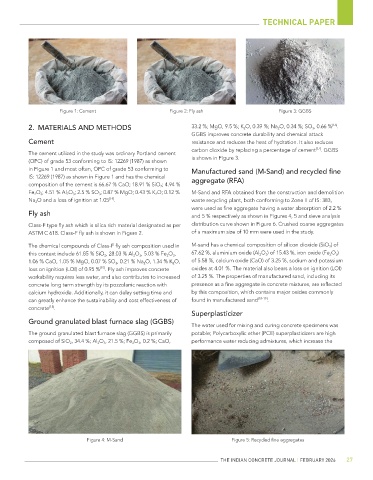
                     Figure 1: Cement                     Figure 2: Fly ash                    Figure 3: GGBS

                                                                                                                 [16]
           2.  MATERIALS AND METHODS                              33.2 %; MgO, 9.5 %; K 2 O, 0.39 %; Na 2 O, 0.34 %; SO 3 , 0.66 % .
                                                                  GGBS improves concrete durability and chemical attack
           Cement                                                 resistance and reduces the heat of hydration. It also reduces
                                                                  carbon dioxide by replacing a percentage of cement . GGBS
                                                                                                            [17]
           The cement utilized in the study was ordinary Portland cement
           (OPC) of grade 53 conforming to IS: 12269 (1987) as shown   is shown in Figure 3.
           in Figure 1 and most often, OPC of grade 53 conforming to   Manufactured sand (M-Sand) and recycled fine
           IS: 12269 (1987) as shown in Figure 1 and has the chemical
           composition of the cement is 66.67 % CaO; 18.91 % SiO 2 ; 4.94 %   aggregate (RFA)
           Fe 2 O 3 ; 4.51 % Al 2 O 3 ; 2.5 % SO 3 ; 0.87 % MgO; 0.43 % K 2 O; 0.12 %   M-Sand and RFA obtained from the construction and demolition
                                      [14]
           Na 2 O and a loss of ignition at 1.05 .                waste recycling plant, both conforming to Zone II of IS: 383,
                                                                  were used as fine aggregate having a water absorption of 2.2 %
           Fly ash                                                and 5 % respectively as shown in Figures 4, 5 and sieve analysis

           Class-F type fly ash which is silica rich material designated as per   distribution curve shown in Figure 6. Crushed coarse aggregates
           ASTM C 618. Class-F fly ash is shown in Figure 2.      of a maximum size of 10 mm were used in the study.

           The chemical compounds of Class-F fly ash composition used in   M-sand has a chemical composition of silicon dioxide (SiO 2 ) of
           this context include 61.85 % SiO 2 , 28.03 % Al 2 O 3 , 5.03 % Fe 2 O 3 ,   67.62 %, aluminium oxide (Al 2 O 3 ) of 15.43 %, iron oxide (Fe 2 O 3 )
           1.06 % CaO, 1.05 % MgO, 0.07 % SO 3 , 0.21 % Na 2 O, 1.34 % K 2 O,   of 5.58 %, calcium oxide (CaO) of 3.25 %, sodium and potassium
                                   [15]
           loss on ignition (LOI) of 0.95 % . Fly ash improves concrete   oxides at 4.01 %. The material also bears a loss on ignition (LOI)
           workability requires less water, and also contributes to increased   of 3.25 %. The properties of manufactured sand, including its
           concrete long term strength by its pozzolanic reaction with   presence as a fine aggregate in concrete mixtures, are reflected
           calcium hydroxide. Additionally, it can delay setting time and   by this composition, which contains major oxides commonly
           can greatly enhance the sustainability and cost effectiveness of   found in manufactured sand [18-19] .
           concrete .
                  [15]
                                                                  Superplasticizer
           Ground granulated blast furnace slag (GGBS)
                                                                  The water used for mixing and curing concrete specimens was
           The ground granulated blast furnace slag (GGBS) is primarily   potable; Polycarboxylic ether (PCE) superplasticizers are high
           composed of SiO 2 , 34.4 %; Al 2 O 3 , 21.5 %; Fe 2 O 3 , 0.2 %; CaO,   performance water reducing admixtures, which increase the


                              Figure 4: M-Sand                                 Figure 5: Recycled fine aggregates


                                                                           THE INDIAN CONCRETE JOURNAL | FEBRUARY 2026  27

