


Page 28 - ICJ Jan 2026
P. 28
TECHNICAL PAPER


                                                                  prescriptive guidelines in most of the codes specify upper limit
                                                                  of w/c and minimum cement content to ensure adequate paste
                                                                  content. Exposure conditions are specified from experiences,
                                                                  the minimum cover to rebar is also specified. Recommended
                                                                  types of cement are specifically prescribed for specific
                                                                  deterioration etc.

                                                                  An elaborate review on degradation phenomena with reference
                                                                                                            [60]
                                                                  to durability of concrete is presented by Glasser et.al . In
                                                                  their article the authors first investigate general transport
                                                                  mechanisms, followed by chloride ingress and corrosion,
                                                                  carbonation, decalcification and sulphate attack. The authors
                                                                  would expect a transition of durability research from empirical
                                                                  state to quantitative basis in future.
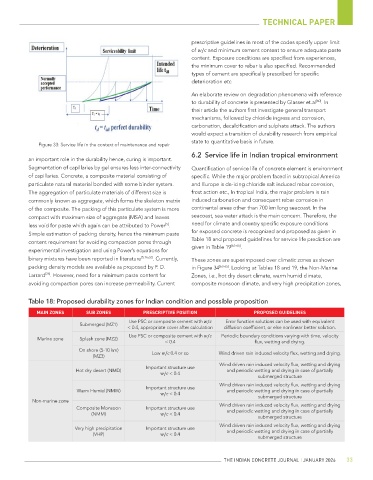
              Figure 33: Service life in the context of maintenance and repair
                                                                  6.2  Service life in Indian tropical environment
           an important role in the durability hence, curing is important.
           Segmentation of capillaries by gel ensures less inter-connectivity   Quantification of service life of concrete element is environment
           of capillaries. Concrete, a composite material consisting of   specific. While the major problem faced in subtropical America
           particulate natural material bonded with some binder system.   and Europe is de-icing chloride salt induced rebar corrosion,
           The aggregation of particulate materials of different size is   frost action etc., In tropical India, the major problem is rain
           commonly known as aggregate, which forms the skeleton matrix   induced carbonation and consequent rebar corrosion in
           of the composite. The packing of this particulate system is more   continental areas other than 700 km long seacoast. In the
           compact with maximum size of aggregate (MSA) and leaves   seacoast, sea water attack is the main concern. Therefore, the
                                                         [5]
           less void for paste which again can be attributed to Power .   need for climate and country specific exposure conditions
                                                                  for exposed concrete is recognized and proposed as given in
           Simple estimation of packing density, hence the minimum paste
           content requirement for avoiding compaction pores through   Table 18 and proposed guidelines for service life prediction are
                                                                               [63-65]
           experimental investigation and using Power’s equations for   given in Table 19  .
           binary mixtures have been reported in literature [5,16,62] . Currently,   These zones are superimposed over climatic zones as shown
           packing density models are available as proposed by F. D.   in Figure 34 [63-65] . Looking at Tables 18 and 19, the Non-Marine
                [26]
           Larrard . However, need for a minimum paste content for   Zones, i.e., hot dry desert climate, warm humid climate,
           avoiding compaction pores can increase permeability. Current   composite monsoon climate, and very high precipitation zones,


           Table 18: Proposed durability zones for Indian condition and possible proposition
             MAIN ZONES       SUB ZONES          PRESCRIPTIVE POSITION                 PROPOSED GUIDELINES
                                            Use PSC or composite cement with w/c    Error function solutions can be used with equivalent
                            Submerged (MZ1)
                                            < 0.4, appropriate cover after calculation  diffusion coefficient, or else nonlinear better solution.
                                            Use PSC or composite cement with w/c   Periodic boundary conditions varying with time, velocity
              Marine zone   Splash zone (MZ2)
                                                         < 0.4                         flux, wetting and drying.
                            On shore (5-10 km)      Low w/c 0.4 or so      Wind driven rain induced velocity flux, wetting and drying.
                                (MZ3)
                                                                           Wind driven rain induced velocity flux, wetting and drying
                                                  Important structure use
                           Hot dry desert (NMD)                              and periodic wetting and drying in case of partially
                                                       w/c < 0.4
                                                                                        submerged structure
                                                                           Wind driven rain induced velocity flux, wetting and drying
                                                  Important structure use
                           Warm Humid (NMW)                                  and periodic wetting and drying in case of partially
                                                       w/c < 0.4                        submerged structure
            Non-marine zone
                                                                           Wind driven rain induced velocity flux, wetting and drying
                           Composite Monsoon      Important structure use    and periodic wetting and drying in case of partially
                                (NMM)                  w/c < 0.4
                                                                                        submerged structure
                                                                           Wind driven rain induced velocity flux, wetting and drying
                          Very high precipitation   Important structure use  and periodic wetting and drying in case of partially
                                (VHP)                  w/c < 0.4
                                                                                        submerged structure

                                                                            THE INDIAN CONCRETE JOURNAL | JANUARY 2026  33

