


Page 11 - ICJ Jan 2026
P. 11
TECHNICAL PAPER


                                                                  a two-component design of the material is conducted so that
                                                                  an accelerator could be added in line at the nozzle, which is
                                                                  equipped with a mixing arrangement. However, printers with a
                                                                  two-component capability are quite complex, expensive and
                                                                  not easily available. Therefore, in order to maximize the output
                                                                  from conventional 3D printing systems, it is necessary to come
                                                                  up with a suite of tests that can capture the complex rheological
                                                                  behavior of 3D printable concrete.

                                                                  The use of the vane shear test as a first level indicator of
                                                                  the rheology in combination with the flow table test was
                                                                  suggested by Rahul et al.  [14] , and the methodology could
                                                                  easily demonstrate the robustness of 3D printed mixtures
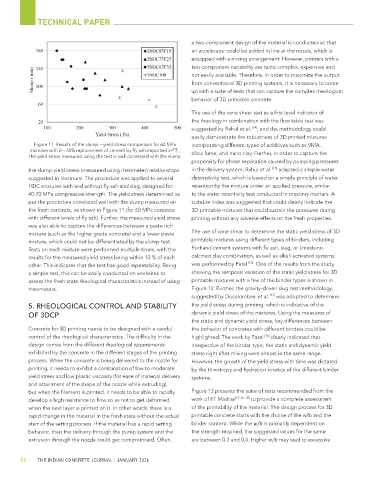
            Figure 11: Results of the slump – yield stress comparison for 60 MPa   incorporating different types of additives such as VMA,
                                                           [13]
           mixtures with 0 – 35% replacement of cement by fly ash (reported in ) ;   silica fume, and nano clay. Further, in order to capture the
           the yield stress measured using the test is well correlated with the slump
                                                                  propensity for phase separation caused by pumping pressures
           the slump-yield stress (measured using rheometer) relationships   in the delivery system, Rahul et al.  [15]  adapted a simple water
           suggested in literature. The procedure was applied to several   desorptivity test, which is based on a simple principle of water
           HDC mixtures with and without fly ash and slag, designed for   retention by the mixture under an applied pressure, similar
           40-70 MPa compressive strength. The yield stress determined as   to the water retentivity test conducted in masonry mortars. A
           per the procedure correlated well with the slump measured on   suitable index was suggested that could clearly indicate the
           the fresh concrete, as shown in Figure 11 (for 60 MPa concrete   3D printable mixtures that could sustain the pressures during
           with different levels of fly ash). Further, the measured yield stress   printing without any adverse effects on the fresh properties.
           was also able to capture the differences between a paste rich
           mixture (such as the higher grade concrete) and a lower paste   The use of vane shear to determine the static yield stress of 3D
           mixture, which could not be differentiated by the slump test.   printable mixtures using different types of binders, including
           Tests on each mixture were performed multiple times, with the   Portland cement systems with fly ash, slag, or limestone-
           results for the measured yield stress being within 10 % of each   calcined clay combination, as well as alkali activated systems,
           other. This indicates that the test has good repeatability. Being   was performed by Patel  [16] . One of the results from the study,
           a simple test, this can be easily conducted on worksites to   showing the temporal variation of the static yield stress for 3D
           assess the fresh state rheological characteristics instead of using   printable mixtures with a few of the binder types is shown in
           rheometers.                                            Figure 12. Further, the gravity-driven slug test methodology
                                                                  suggested by Ducolombier et al.  [17]  was adopted to determine
           5. RHEOLOGICAL CONTROL AND STABILITY                   the yield stress during printing, which is indicative of the
                                                                  dynamic yield stress of the mixtures. Using the measures of
           OF 3DCP
                                                                  the static and dynamic yield stress, key differences between
           Concrete for 3D printing needs to be designed with a careful   the behavior of concretes with different binders could be
           control of the rheological characteristics. The difficulty in the   highlighted. The work by Patel  [16]  clearly indicated that
           design comes from the different rheological requirements   irrespective of the binder type, the static and dynamic yield
           exhibited by the concrete in the different stages of the printing   stress right after mixing were almost in the same range.
           process. When the concrete is being delivered to the nozzle for   However, the growth of the yield stress with time was dictated
           printing, it needs to exhibit a combination of low to moderate   by the thixotropy and hydration kinetics of the different binder
           yield stress and low plastic viscosity (for ease of material delivery   systems.
           and attainment of the shape of the nozzle while extruding),
           but when the filament is printed, it needs to be able to rapidly   Figure 13 presents the suite of tests recommended from the
           develop a high resistance to flow so as not to get deformed   work of IIT Madras [14-16, 18]  to provide a complete assessment
           when the next layer is printed on it. In other words, there is a   of the printability of the material. The design process for 3D
           rapid change in the material in the fresh state without the actual   printable concrete starts with the choice of the w/b and the
           start of the setting process. If the material has a rapid setting   binder content. While the w/b is primarily dependent on
           behavior, then the delivery through the pump system and the   the strength required, the suggested values for the same
           extrusion through the nozzle could get compromised. Often,   are between 0.3 and 0.4. Higher w/b may lead to excessive


        56    THE INDIAN CONCRETE JOURNAL | JANUARY 2026

