


Page 28 - openaccess
P. 28
TECHNICAL PAPER


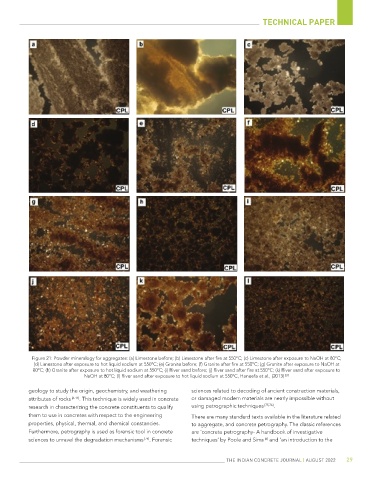
            Figure 21: Powder mineralogy for aggregates: (a) Limestone before; (b) Limestone after fire at 550°C; (c) Limestone after exposure to NaOH at 80°C;
            (d) Limestone after exposure to hot liquid sodium at 550°C; (e) Granite before; (f) Granite after fire at 550°C; (g) Granite after exposure to NaOH at
            80°C; (h) Granite after exposure to hot liquid sodium at 550°C; (i) River sand before; (j) River sand after fire at 550°C; (k) River sand after exposure to
                             NaOH at 80°C; (l) River sand after exposure to hot liquid sodium at 550°C, Haneefa et al., (2013)  [21]

           geology to study the origin, geochemistry, and weathering   sciences related to decoding of ancient construction materials,
           attributes of rocks  [6-11] . This technique is widely used in concrete   or damaged modern materials are nearly impossible without
           research in characterizing the concrete constituents to qualify   using petrographic techniques  [75,76] .
           them to use in concretes with respect to the engineering   There are many standard texts available in the literature related
           properties, physical, thermal, and chemical constancies.   to aggregate, and concrete petrography. The classic references
           Furthermore, petrography is used as forensic tool in concrete   are ‘concrete petrography- A handbook of investigative
           sciences to unravel the degradation mechanisms  [74] . Forensic   techniques’ by Poole and Sims  and ‘an introduction to the
                                                                                           [6]

                                                                             THE INDIAN CONCRETE JOURNAL | AUGUST 2022  29

