


Page 29 - openaccess
P. 29
TECHNICAL PAPER


                                                                  science, and technology by Ramachandran and Beaudoin  [84] ,
                                                                  and finally the microstructural guide for cementitious materials
                                                                  by Scrivener et al.  [85] .
                                                                  Apart from microscopy, microanalytical tools are used in
                                                                  petrography to assess the inherent properties, performance in
                                                                  different exposures, and forensic assessment of degradation of
                                                                  concrete materials. Table 7 provides a quick glance of commonly
                                                                  used petrographic techniques in concrete research with their
                                                                  relevance  [6-11,74-88] . Petrography is a collective name given to
                                                                  the characterization methodologies based on microanalytical
                                                                  techniques provided in Table 7. The petrographic interpretations
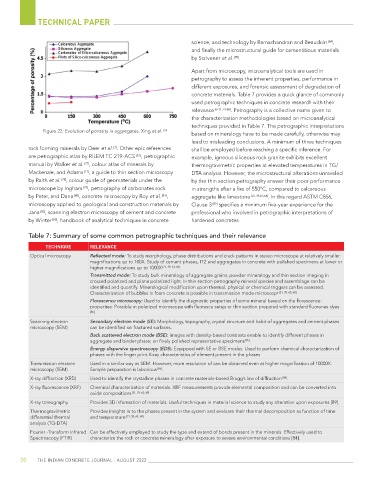
               Figure 22: Evolution of porosity in aggregates, Xing et al.  [73]
                                                                  based on mineralogy have to be made carefully, otherwise may
                                                                  lead to misleading conclusions. A minimum of three techniques
           rock forming minerals by Deer et al. . Other epic references   shall be employed before reaching a specific inference. For
                                        [7]
           are petrographic atlas by RILEM TC 219-ACS  [51] , petrographic   example, igneous siliceous rock granite exhibits excellent
           manual by Walker et al.  [77] , colour atlas of minerals by   thermogravimetric properties at elevated temperatures in TG/
           Mackenzie, and Adams  [11] , a guide to thin section microscopy   DTA analysis. However, the microstructural alterations unraveled
           by Raith et al.  [78] , colour guide of geomaterials under the   by the thin section petrography answer their poor performance
           microscope by Ingham  [79] , petrography of carbonates rock   in strengths after a fire of 550°C, compared to calcareous
           by Peter, and Dana  [80] , concrete microscopy by Roy et al.  [81] ,   aggregate like limestone  [21,39,63,68] . In this regard ASTM C856,
           microscopy applied to geological and construction materials by   Clause 3  [89]  specifies a minimum five-year experience for the
           Jana  [82] , scanning electron microscopy of cement and concrete   professional who involved in petrographic interpretations of
           by Winter  [83] , handbook of analytical techniques in concrete   hardened concretes

           Table 7: Summary of some common petrographic techniques and their relevance
                TECHNIQUE      RELEVANCE
           Optical microscopy  Reflected mode: To study morphology, phase distributions and crack patterns in stereo microscope at relatively smaller
                               magnifications up to 100X. Study of cement phases, ITZ and aggregates in concrete with polished specimens at lower or
                               higher magnifications up to 1000X  [21, 39, 63, 68] .
                               Transmitted mode: To study bulk mineralogy of aggregate grains, powder mineralogy and thin section imaging in
                               crossed polarized and plane polarized light. In thin section petrography mineral species and assemblage can be
                               identified and quantify. Mineralogical modification upon thermal, physical or chemical triggers can be assessed.
                               Characterization of bubbles in foam concrete is possible in transmission mode microscop y [21, 39, 63, 68].
                               Florescence microscopy: Used to identify the diagnostic properties of some mineral based on the florescence.
                               properties. Possible in polarized microscope with fluoresce setup or thin section prepared with standard fluorenes dyes
                               [86] .
           Scanning electron    Secondary electron mode (SE): Morphology, topography, crystal structure and habit of aggregates and cement phases
           microscopy (SEM)    can be identified on fractured surfaces.
                               Back scattered electron mode (BSE): Images with density-based contrasts enable to identify different phases in
                               aggregate and binder phase; on finely polished representative specimens  [85] .
                               Energy dispersive spectroscopy (EDS): Equipped with SE or BSE modes. Used to perform chemical characterization of
                               phases with the finger print X-ray characteristics of element present in the phases
           Transmission electron   Used in a similar way as SEM. However, more resolution of can be obtained even at higher magnification of 10000X.
           microscopy (TEM)    Sample preparation is laborious  [85] .
           X-ray diffraction (XRD)  Used to identify the crystalline phases in concrete materials-based Bragg’s law of diffraction  [88] .
           X-ray fluorescence (XRF)   Chemical characterization of materials. XRF measurements provide elemental composition and can be converted into
                               oxide compositions  [21, 39, 63, 68]
           X-ray tomography    Provides 3D information of materials. Useful techniques in material science to study any alteration upon exposures [89].
           Thermogravimetric    Provides insights in to the phases present in the system and evaluate their thermal decomposition as function of time
           differential thermal    and temperature  [21, 38, 64, 68]
           analysis (TG-DTA)
           Fourier -Transform Infrared  Can be effectively employed to study the type and extend of bonds present in the minerals. Effectively used to
           Spectroscopy (FTIR)  characterize the rock or concrete mineralogy after exposure to severe environmental conditions [84].


        30    THE INDIAN CONCRETE JOURNAL | AUGUST 2022

