


Page 6 - Open-Access-Nov-2020
P. 6
TECHNICAL PAPER


             100                                                     Electrodes modulating    Reference electrode
                                                                     the confinement
                     OPC 300-w/c 0.38
                     FAC 300-w/c 0.5                                                                   Concrete surface
                     OPC 400 w/c 0.5
            Electrochemical weight loss (g)  10               Current                                        Auxiliary
                                                                                                              Guard
                     OPC 400 w/c 0.6
                                                                                                              ring
                                                                                                             counter
                                                                                                             electrode
                                                              lines


               1
                1                     10                    100         Area where the Current is confined
                                 Gravimetric loss (g)
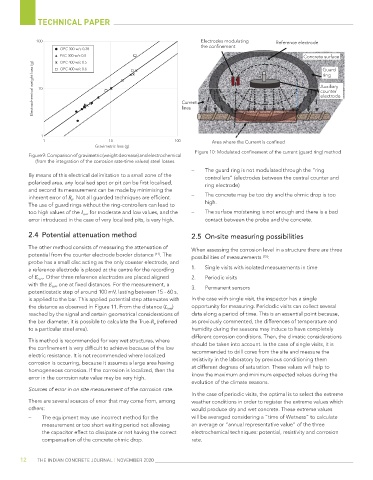
                                                                   Figure 10: Modulated confinement of the current (guard ring) method
           Figure 9: Comparison of gravimetric (weight decrease) and electrochemical
             (from the integration of the corrosion rate-time values) steel losses
                                                                  –   The guard ring is not modulated through the “ring
           By means of this electrical delimitation to a small zone of the   controllers” (electrodes between the central counter and
           polarized area, any localised spot or pit can be first localised,   ring electrode)
           and second its measurement can be made by minimising the
           inherent error of R p . Not all guarded techniques are efficient.    –   The concrete may be too dry and the ohmic drop is too
           The use of guard rings without the ring-controllers can lead to   high.
           too high values of the I corr  for moderate and low values, and the   –   The surface moistening is not enough and there is a bad
           error introduced in the case of very localised pits, is very high.  contact between the probe and the concrete.

           2.4  Potential attenuation method                      2.5  On-site measuring possibilities
           The other method consists of measuring the attenuation of   When assessing the corrosion level in a structure there are three
           potential from the counter electrode border distance  . The   possibilities of measurements  :
                                                     [11]
                                                                                          [15]
           probe has a small disc acting as the only counter electrode, and
           a reference electrode is placed at the centre for the recording   1.   Single visits with isolated measurements in time
           of E corr . Other three reference electrodes are placed aligned   2.   Periodic visits
           with the E corr  one at fixed distances. For the measurement, a   3.   Permanent sensors
           potentiostatic step of around 100 mV, lasting between 15 - 60 s,
           is applied to the bar. This applied potential step attenuates with   In the case with single visit, the inspector has a single
           the distance as observed in Figure 11. From the distance (L crit )   opportunity for measuring. Peridodic visits can collect several
           reached by the signal and certain geometrical considerations of   data along a period of time. This is an essential point because,
           the bar diameter, it is possible to calculate the True-R p  (referred   as previously commented, the differences of temperature and
           to a particular steel area).                           humidity during the seasons may induce to have completely
                                                                  different corrosion conditions. Then, the climatic considerations
           This method is recommended for very wet structures, where   should be taken into account. In the case of single visits, it is
           the confinement is very difficult to achieve because of the low   recommended to drill cores from the site and measure the
           electric resistance. It is not recommended where localized
           corrosion is occurring, because it assumes a large area having   resistivity in the laboratory by previous conditioning them
           homogeneous corrosion. If the corrosion is localized, then the   at different degrees of saturation. These values will help to
           error in the corrosion rate value may be very high.    know the maximum and minimum expected values during the
                                                                  evolution of the climate seasons.
           Sources of error in on site measurement of the corrosion rate.
                                                                  In the case of periodic visits, the optimal is to select the extreme
           There are several sources of error that may come from, among   weather conditions in order to register the extreme values which
           others:                                                would produce dry and wet concrete. These extreme values
           –   The equipment may use incorrect method for the     will be averaged considering a “time of Wetness” to calculate
               measurement or too short waiting period not allowing   an average or “annual representative value” of the three
               the capacitor effect to dissipate or not having the correct   electrochemical techniques: potential, resistivity and corrosion
               compensation of the concrete ohmic drop.           rate.


        12    THE INDIAN CONCRETE JOURNAL | NOVEMBER 2020

