


Page 14 - ICJ Feb Openaccess 2026
P. 14
TECHNICAL PAPER


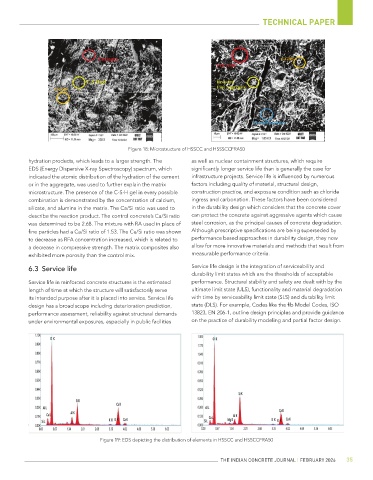
                                            Figure 18: Microstructure of HSSCC and HSSSCCFRA50
           hydration products, which leads to a larger strength. The   as well as nuclear containment structures, which require
           EDS (Energy Dispersive X-ray Spectroscopy) spectrum, which   significantly longer service life than is generally the case for
           indicated the atomic distribution of the hydration of the cement   infrastructure projects. Service life is influenced by numerous
           or in the aggregate, was used to further explain the matrix   factors including quality of material, structural design,
           microstructure. The presence of the C-S-H gel in every possible   construction practice, and exposure condition such as chloride
           combination is demonstrated by the concentration of calcium,   ingress and carbonation. These factors have been considered
           silicate, and alumina in the matrix. The Ca/Si ratio was used to   in the durability design which considers that the concrete cover
           describe the reaction product. The control concrete’s Ca/Si ratio   can protect the concrete against aggressive agents which cause
           was determined to be 2.68. The mixture with RA used in place of   steel corrosion, as the principal causes of concrete degradation.
           fine particles had a Ca/Si ratio of 1.53. The Ca/Si ratio was shown   Although prescriptive specifications are being superseded by
           to decrease as RFA concentration increased, which is related to   performance based approaches in durability design, they now
           a decrease in compressive strength. The matrix composites also   allow for more innovative materials and methods that result from
           exhibited more porosity than the control mix.          measurable performance criteria.
                                                                  Service life design is the integration of serviceability and
           6.3  Service life
                                                                  durability limit states which are the thresholds of acceptable
           Service life in reinforced concrete structures is the estimated   performance. Structural stability and safety are dealt with by the
           length of time at which the structure will satisfactorily serve   ultimate limit state (ULS), functionality and material degradation
           its intended purpose after it is placed into service. Service life   with time by serviceability limit state (SLS) and durability limit
           design has a broad scope including deterioration prediction,   state (DLS). For example, Codes like the fib Model Codes, ISO
           performance assessment, reliability against structural demands   13823, EN 206-1, outline design principles and provide guidance
           under environmental exposures, especially in public facilities   on the practice of durability modeling and partial factor design.


                                   Figure 19: EDS depicting the distribution of elements in HSSCC and HSSCCFRA50


                                                                           THE INDIAN CONCRETE JOURNAL | FEBRUARY 2026  35

