


Page 15 - ICJ Feb Openaccess 2026
P. 15
TECHNICAL PAPER


           They highlight the need to quantify deterioration rates to make   Table 2: Experimental results of slope dc/dt and
           service life predictions accurate and to manage the lifecycle of   diffusion  coefficients  determined  based  on  Fick’s
           the structure to optimize maintenance and repair. Service life   Second Law using the procedure described in NT
           design is surrounded by limit states. Structural integrity is what it   Build 443
           aims to address under the maximum expected load that the ULS
                                                                                               -8
                                                                                                           -13
                                                                                        dc/dt (x10 )
                                                                                                                2
           processes, the SLS also accomplishes functionality of the metal   MIXES     (m.mol/cm .s)   D(x10 ) (m /s)
                                                                                               3
           while the DLS does it to prevent the material from decaying to
           the point of it losing its length. Model codes based on durability   SCC        1.2             2.67
           design standards like ISO 13823 proscribe the use of models   SCCFRA50           2              4.56
           that can realistically predict deterioration and meet specified   SCCFRA100     3.05            6.77
           reliability levels. There are also standards such as ISO 13823
                                                                        HSSCC              7.3             1.62
           and the fib Model Code for service life design which integrate
           probabilistic and deterministic approaches for SLP, ranging from   HSSCCFRA50   1.03             2.3
           a full probabilistic analysis to partial factor design and finally the   HSSCCFRA100  1.45      3.22
           deemed-to-satisfy approach. These engineer standards quantify
           performance in terms of metrics that are used to evaluate   The diffusion coefficient for service life estimation was found
           durability based on calibrated field and lab data and guide   experimentally by diffusion cell method which allowed to
           engineers to design for a specified time duration [36-37] .
                                                                  find out the chloride concentration in the sample. Chloride
           Previous research indicates that service life methodology   penetration is determined from the slope of the curve obtained
           considers material degradation, environmental effects and load   from a graph drawn between chloride concentration and
                                                                                     [40]
           application and calculates structural longevity based on these   duration (Table 2) (dc/dt) . In the RCPT, the reservoirs R 1  and
           considerations, with concrete structures particularly susceptible   R 2  are filled with sodium chloride (NaCl) and sodium hydroxide
           to high loads that accelerate chloride penetration and micro   solution (NaOH) respectively. The cathode (in chloride solution)
                 [38]
           cracking . Organic concrete coatings increase chloride   and the anode (in hydroxide solution) are connected to a D.C
           resistance, with immediate strength benefits for infiltrating   power pack by applying a 30.0 V voltage, NaCl ionizes and the
           coatings, and longer term durability. Simulated aging methods   Cl ion gets attracted towards anode as depicted in Figure 21.
           are valuable for predicting service life under environmental
           stressors accurately .                                 Sample from R 2  is collected and the chloride content by
                          [39]
                                                                  argentometric method by volumetric titration in a time interval is
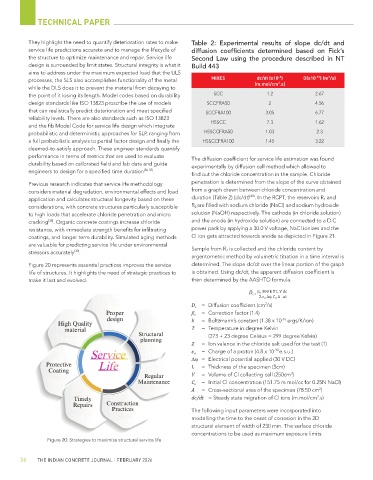
           Figure 20 represents essential practices improves the service   determined. The slope dc/dt over the linear portion of the graph
           life of structures. It highlights the need of strategic practices to   is obtained. Using dc/dt, the apparent diffusion coefficient is
           make it last and evolved.                              then determined by the AASHTO formula.

                                                                                        β 0  300 k T L V dc
                                                                                     D c =
                                                                                        Z e 0  Δψ C 0  A dt
                                                                                          2
                                                                  D c   =  Diffusion coefficient (cm /s)
                                                                  β o   =  Correction factor (1.4)
                                                                                                -16
                                                                  k   =  Boltzmann’s constant (1.38 x 10  ergs/K/ion)
                                                                  T   =  Temperature in degree Kelvin
                                                                       (273 + 23 degree Celsius = 299 degree Kelvin)
                                                                  Z   =  Ion valance in the chloride salt used for the test (1)
                                                                                             -10
                                                                  e o   =  Charge of a proton (4.8 x 10 e.s.u.)
                                                                  ∆ψ  =  Electrical potential applied (30 V DC)
                                                                  L   =  Thickness of the specimen (5cm)
                                                                                                   3
                                                                  V   =  Volume of Cl collecting cell (250cm )
                                                                  C o   =  Initial Cl concentration (151.75 m mol/cc for 0.25N NaCl)
                                                                                                             2
                                                                  A   =  Cross-sectional area of the specimen (78.50 cm )
                                                                                                            3
                                                                  dc/dt   = Steady state migration of Cl ions (m.mol/cm .s)
                                                                  The following input parameters were incorporated into
                                                                  modelling the time to the onset of corrosion in the 2D
                                                                  structural element of width of 230 mm. The surface chloride
                                                                  concentrations to be used as maximum exposure limits
                 Figure 20: Strategies to maximize structural service life


        36    THE INDIAN CONCRETE JOURNAL | FEBRUARY 2026

