


Page 11 - ICJ Jan 2026
P. 11
TECHNICAL PAPER


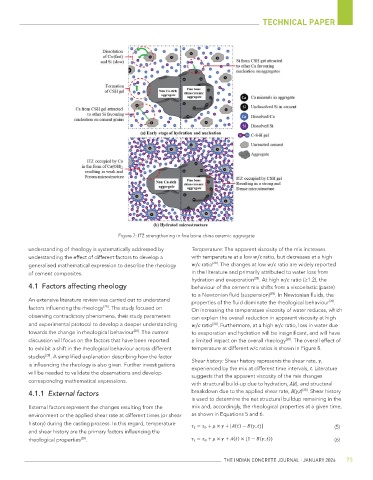
                                         Figure 7: ITZ strengthening in fine bone china ceramic aggregate

           understanding of rheology is systematically addressed by   Temperature: The apparent viscosity of the mix increases
           understanding the effect of different factors to develop a   with temperature at a low w/c ratio, but decreases at a high
                                                                         [28]
           generalised mathematical expression to describe the rheology   w/c ratio . The changes at low w/c ratio are widely reported
           of cement composites.                                  in the literature and primarily attributed to water loss from
                                                                                       [28]
                                                                  hydration and evaporation . At high w/c ratio (≥1.2), the
           4.1  Factors affecting rheology                        behaviour of the cement mix shifts from a viscoelastic (paste)
                                                                  to a Newtonian fluid (suspension) . In Newtonian fluids, the
                                                                                            [28]
           An extensive literature review was carried out to understand   properties of the fluid dominate the rheological behaviour .
                                                                                                                [28]
                                    [28]
           factors influencing the rheology . The study focused on   On increasing the temperature viscosity of water reduces, which
           observing contradictory phenomena, their study parameters   can explain the overall reduction in apparent viscosity at high
           and experimental protocol to develop a deeper understanding   w/c ratio . Furthermore, at a high w/c ratio, loss in water due
                                                                         [28]
                                              [28]
           towards the change in rheological behaviour . The current   to evaporation and hydration will be insignificant, and will have
           discussion will focus on the factors that have been reported   a limited impact on the overall rheology . The overall effect of
                                                                                                 [28]
           to exhibit a shift in the rheological behaviour across different   temperature at different w/c ratios is shown in Figure 8.
           studies . A simplified explanation describing how the factor
                [28]
           is influencing the rheology is also given. Further investigations   Shear history: Shear history represents the shear rate, γ,
                                                                  experienced by the mix at different time intervals, t. Literature
           will be needed to validate the observations and develop   suggests that the apparent viscosity of the mix changes
           corresponding mathematical expressions.                with structural build-up due to hydration, A(t), and structural
                                                                                                       [28]
           4.1.1  External factors                                breakdown due to the applied shear rate, B(γ,t) . Shear history
                                                                  is used to determine the net structural buildup remaining in the
           External factors represent the changes resulting from the   mix and, accordingly, the rheological properties at a given time,
           environment or the applied shear rate at different times (or shear   as shown in Equations 5 and 6.
           history) during the casting process. In this regard, temperature
                                                                                                                  (5)
           and shear history are the primary factors influencing the
           rheological properties .                                                                               (6)
                            [28]

                                                                            THE INDIAN CONCRETE JOURNAL | JANUARY 2026  73

